A technical diagram showing the logic of lemonade braids with curls placement, comparing an

Lemonade Braids With Curls for Every Face Shape: What to Ask Your Braider

Lemonade Braids With Curls for Every Face Shape: What to Ask Your Braider

You have seen lemonade braids with curls taking over Instagram, Pinterest, and every wedding  mood board imaginable. But here is the question nobody talks about: why does the same style look  jaw-dropping on one woman and just slightly off on another? 

The answer is not the braider. It is not the hair brand. It is face shape — and more specifically,  where the curls fall relative to your features. 

Unlike straight braid ends that hang predictably, curly ends add volume at a specific point. That  point either works with your bone structure or fights it. The difference between a style that stops  people in their tracks and one that feels like something is missing often comes down to one  conversation you have — or do not have — before you sit in the chair. 

This guide breaks down lemonade braids with curls for every face shape, explains the curl  placement logic behind each recommendation, and gives you the exact words to say to your  braider. Whether you are booking a salon or getting re-inspired after seeing your favorite influencer rock the look, consider this your full consultation. Ready for a statement-making style? Call 301-613-6650 to book your lemonade braids in District Heights today.

What Are Lemonade Braids With Curls?

Lemonade braids are side-swept cornrows that lie flat against the scalp, traditionally braided from the front hairline to the back or nape. Because of the detailed parting and side-swept profile, the installation time typically takes 4 to 6 hours.. The name became a cultural moment when Beyonce debuted  the style in her 2016 Lemonade visual album — and the look has evolved significantly since then. 

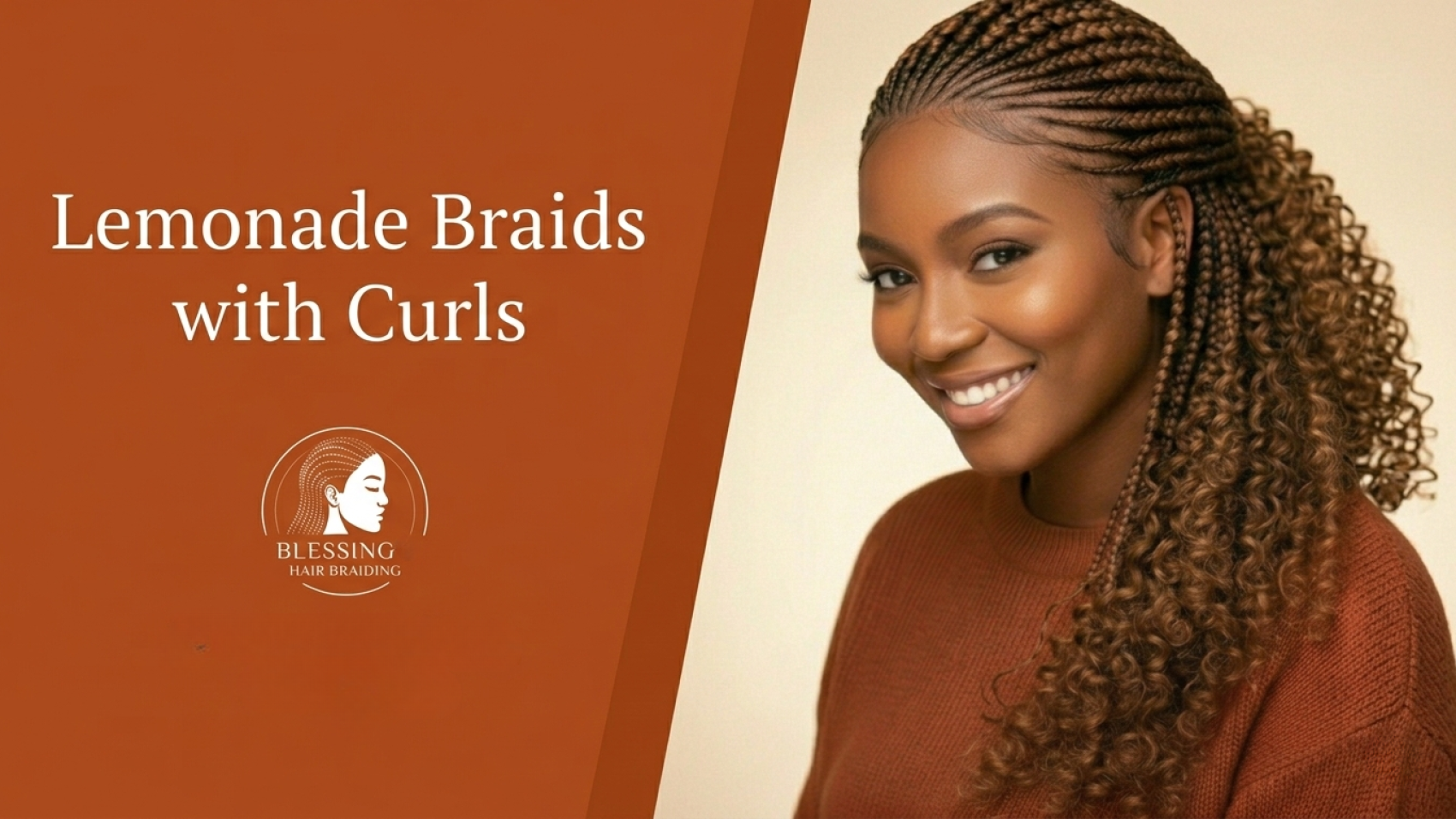
Lemonade braids with curls take that foundation and add texture at the ends, either through curly  braiding hair such as Bohemian or water wave bundles, crochet curls, or leaving out your natural  hair to curl. The curly variation is also called goddess lemonade braids or bohemian lemonade braids depending on the curl pattern and installation technique. Because this is a highly customized protective style, your estimated investment typically ranges from $100 to $250, based on the length and the specific curly ends you choose.

How Curly Ends Change the Style?

Here is what changes everything about this version: straight ends fall in a controlled, predictable  line. Curly ends bloom outward. That blooming is volume. urly volume placed near your chin widens. Styling these braids to reach your chest elongates. Finally, letting the textured ends rest at your collarbone balances. Understanding  this principle is the foundation of choosing the right lemonade braids with curls for your face shape. 

Why Face Shape Matters More With Curly Ends 

Most face shape advice for braids was written for straight-end styles. With straight ends, the braids  simply fall and hang. With curly ends, you introduce a volume zone — a concentrated area of  fullness that your eye is drawn to. 

Think of it like a painter adding texture to a portrait. Every curl placement is a design decision. The  concept braiders use (though they may not always name it) is the curl drop point: the vertical  position on your body where the curls begin to open up and create maximum volume. 

Jaw-length drop points: adds width directly at the widest perception point of the face. Collarbone-length curly ends: creates a natural frame below the face, balancing most structures. Waist-length goddess styles: draws the eye downward, elongating perceived face and neck length.

“When clients come in for lemonade braids with curls, the number one mistake is not discussing where the curl begins. That endpoint changes the entire face frame.”

— Licensed Professional Braider

This is why two women can sit in the same chair, ask for the same style, and leave with completely  different results in terms of how flattering the look is. The braider who understands your face shape  will adjust curl length and volume automatically. The checklist at the end of this guide helps you  communicate this even if your braider does not bring it up first. 

How to Identify Your Face Shape in 3 Steps

Grab a flexible tape measure or a soft string and a mirror. You only need four measurements. 

  1. Measure your forehead: From the peak of one eyebrow arch to the other. 
  2. Measure your cheekbones: Across the widest point of your face, just below your outer eye  corners. 
  3. Measure your jawline: From your chin to just below your ear, multiply by two. 4. Measure your face length: From the center of your hairline to the tip of your chin. Now compare: 
  • Oval: Face length is notably longer than width. Forehead slightly wider than jaw.  Cheekbones are the widest point. 
  • Round: Face length and width are nearly equal. Soft jaw, full cheeks, no sharp angles. Square: Forehead, cheekbones, and jawline are roughly equal in width. Jaw is angular. Heart: Forehead is widest measurement. Jaw tapers to a narrow or pointed chin. Oblong/Long: Face length is significantly greater than width. Forehead, cheekbones, and  jaw are similar in width. 

Diamond: Cheekbones are the widest point. Both forehead and jawline are narrower.
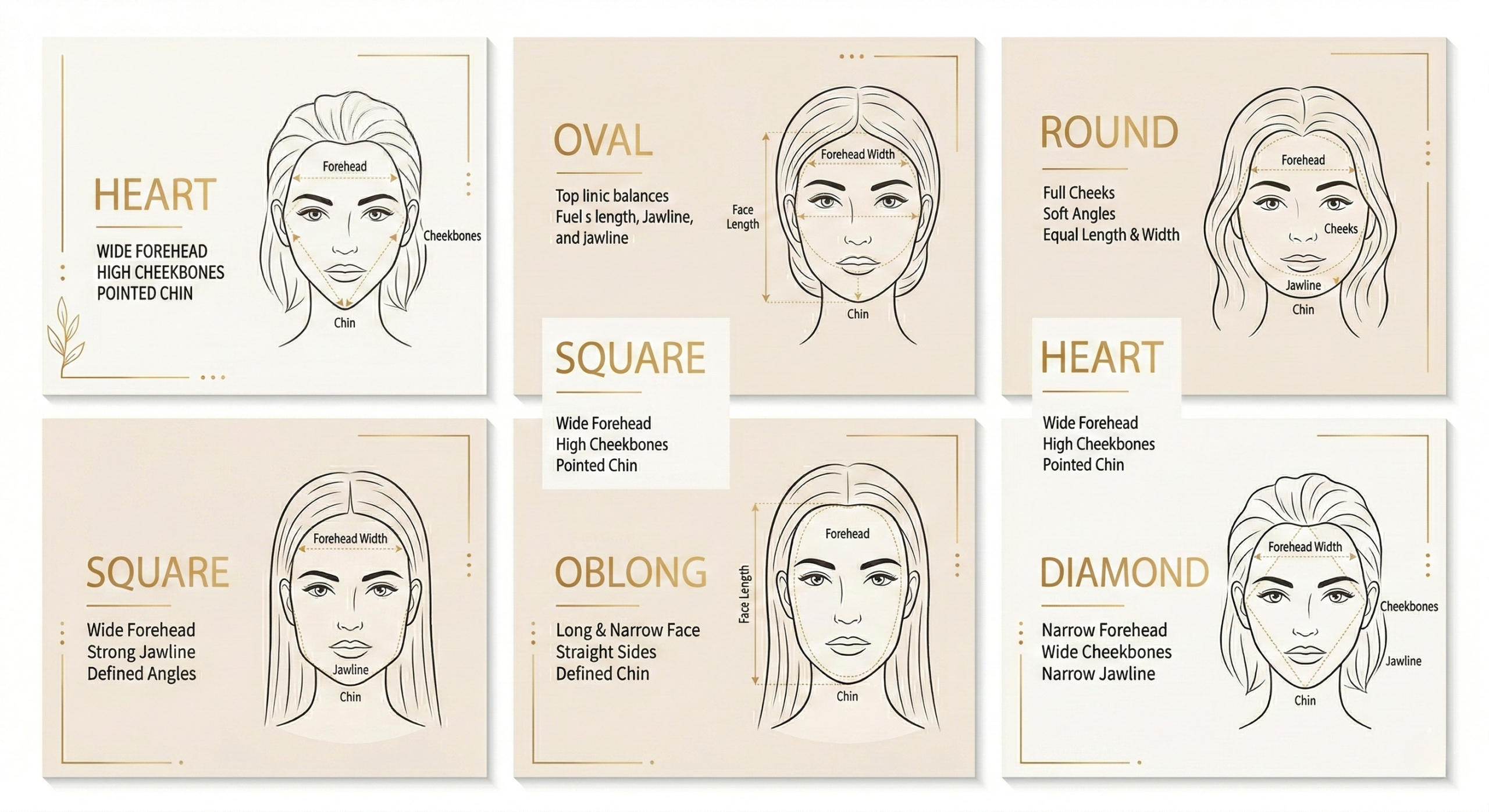
Lemonade Braids With Curls for Every Face Shape

Oval Face — The Most Versatile Canvas 

If you have an oval face, consider yourself the lucky one. Oval is the most versatile face shape for  lemonade braids with curls because your proportions are naturally balanced. Almost any variation  will work — but almost is the key word.

  • Best curl style: Medium-length ringlets or loose waves. Not too tight (avoids adding too much  width) and not too stretched (avoids adding too much length). 
  • Ideal braid sweep: Deep side part with curls landing at mid-chest. Classic, timeless, and  endlessly flattering. 
  • Braid size: Medium to thin. Jumbo braids on an oval face can shift proportions slightly — not a  disaster, but medium braids are cleaner. 

Tell your braider: I have an oval face and I want a classic deep side sweep with  medium curly ends hitting at about chest length. 

Avoid: Extremely voluminous curls that end at the jaw. This is the one configuration that can  visually shorten an oval face and add unwanted roundness.

Round Face — Elongate and Define 

The goal for a round face is always vertical. You want to create the illusion of length and reduce the  perception of width. Lemonade braids with curls can do this beautifully — or completely undermine  it depending on the choices. 

  • Best curl style: Stretched, loose curls or elongated waves. Tight ringlets are your biggest  enemy here because they compress and widen at cheek level, which is exactly where you do not  want more volume. 
  • Ideal braid sweep: Dramatic deep side part. The asymmetry itself creates a diagonal line across  the face which elongates. Pair this with long curls hitting at the waist or below. 
  • Braid size: Thin to medium only. Jumbo lemonade braids add horizontal mass to the face — every millimeter of extra width counts on a round face. 

Tell your braider: I have a round face. I need a dramatic deep side part, thin braids,  and long loose wavy ends that hit at the waist, not the chin. Please avoid tight  ringlets near my face. 

 Avoid: Curls that end at chin or jaw length. This is the most common and most damaging  mistake for round faces. Chin-length curls park maximum volume right at the widest point and  make the face read as significantly rounder. 

Square Face — Soften the Jawline 

A square face has gorgeous structure and strong bone definition. The goal with lemonade braids  with curls is not to fight that — it is to introduce softness around the jaw while keeping the drama of  the style intact. 

  • Best curl style: Soft, loose waves or bohemian curls. The unstructured, flowing quality of  bohemian curls naturally softens angular jaw lines without looking underdone. 
  • Ideal braid sweep: Medium side part — not too extreme. A dramatic deep sweep on a square  face can actually pull attention to one angular corner of the jaw. Keep it elegant and diagonal. 
  • Face-framing secret: Ask your braider for a few face-framing curly pieces near the temples.  These softer, looser pieces that are not fully braided down create a wispy frame that rounds the  face perception beautifully. 

Tell your braider: I have a square jawline. I want soft, loose bohemian waves and a  medium side part. Can you add a few face-framing curly pieces near my temples to  soften the angles? 

 Avoid: Blunt braid ends that cut straight across at the jawline. If any straight-end pieces fall right  at jaw height, it draws a horizontal line that emphasizes the squareness. Curls past the jaw always  work better. 

Heart Face — Balance a Wider Forehead  

A heart-shaped face has a wider forehead and a narrower chin. The visual goal is to add volume  and width at the lower half of the face to balance the proportions. Lemonade braids with curls are  actually one of the most flattering styles for this face shape when done correctly. 

  • Best curl style: Fuller, more voluminous curls that end near the collarbone. The width those  curls create at shoulder and collarbone level visually widens the lower face and creates the  balance you are after. 
  • Ideal braid sweep: Softer side part rather than extreme. A very dramatic deep sweep on a heart  face can shift all the visual weight to one upper side of the forehead, which is already the widest  point. 
  • Curl volume: This is one of the few face shapes where bigger, fuller curls are your friend. Do  not be afraid to ask for maximum volume on the ends. 

Tell your braider: I have a heart-shaped face. I want fuller, voluminous curls ending  around my collarbone to balance my forehead. Please keep the side part medium,  not too dramatic, and maximize the curl volume at the ends.

 Avoid: Very thin, tight curls at waist length. This removes all the volume from the lower half of  your face and can make the forehead look even wider by comparison. 

Oblong/Long Face — Add Width and Volume 

An oblong or long face needs the opposite strategy from a round face. Where round needs length,  oblong needs width. Where round wants stretched curls, oblong wants full, wide curls. Every styling  choice should work to break the vertical line and add perceived width. 

  • Best curl style: Large, wide, voluminous curls. The fuller and wider the better. Think big  bohemian ringlets rather than stretched waves. 
  • Ideal braid sweep: Gentle, subtle side part. A very dramatic deep sweep creates a long  diagonal line which adds to the perceived length of the face. A softer part keeps the volume more  centered and horizontal. 
  • Curl length: Shoulder-length is your ideal end point. Curls at the collarbone or above. Waist length styles take the eye all the way down and make the face look even longer by comparison. 

Tell your braider: I have a long face. I need wide, voluminous curls that end at  shoulder length or above. Please keep the side part subtle, not a dramatic deep  sweep, and maximize width in the curl pattern. 

 Avoid: Long, thin, elongated curl styles. Every additional inch in the wrong direction adds  perceived length to an already long face. Shoulder length is the absolute maximum for most oblong  face shapes. 

Diamond Face — Highlight Cheekbones, Balance the Extremes 

Diamond is one of the less commonly discussed face shapes but one of the most striking. Wide  cheekbones, a narrow forehead, and a narrow jaw create a uniquely angular structure. The goal  with lemonade braids with curls is to add softness at the extremes — width at the top and at the  chin — while not over-emphasizing those dominant cheekbones. 

  • Best curl style: Medium curls, neither too tight nor too voluminous. You want a soft texture that  adds width at the chin level without creating so much mass that the cheekbones are the first thing  every eye goes to. 
  • Ideal braid sweep: Soft to medium side part. An extreme deep sweep creates maximum volume  on one side of the head which can over-emphasize the wide cheekbone area asymmetrically.
  • Curl length: Collarbone is ideal. This places the volume point right at chin and jaw level which  adds the width your lower face needs. 
  • Tell your braider: I have a diamond face with wide cheekbones and a narrower  forehead and chin. I want a soft side part, medium-volume curls at collarbone length,  and I want to avoid a dramatic deep sweep that puts all the volume at my cheekbone  level. 

 Avoid: Very dramatic one-sided volume at the cheekbone level. This is the one configuration  that turns a striking feature into an imbalanced one. 

The Complete “What to Ask Your Braider” Checklist 

Most people go into a braiding appointment with a photo and a prayer. The clients who consistently  walk out with the most flattering installs come prepared with specific, informed questions. Here is  your complete consultation guide, organized by when to use it. 

Before Booking (Phone, DM, or Text) 

  1. Do you specialize in lemonade braids with curly ends specifically, or primarily straight-end  lemonade braids? 
  2. Can I see photos of your work on clients with my face shape? 
  3. What braiding hair do you use for the curly ends — kanekalon, water wave bundles, human  hair, or crochet curls? 
  4. How long will the full appointment take with curly ends added versus straight ends? 
  5. Should I buy my own hair, and if so, how many packs do I need for medium-length curly  lemonade braids? 

At the Consultation (In the Chair Before Starting) 

  1. Based on my face shape, where do you recommend the curl drop point — chin, collarbone,  chest, or waist? 
  2. How deep should my side part be to flatter my face shape specifically? 
  3. What braid size — thin, medium, or jumbo — do you recommend for my face shape and hair  thickness? 
  4. Will you add face-framing pieces or baby hair, and what would work best for my face shape?
  5. What is your process for sealing or setting the curls to maximize longevity? 

Curl Type Glossary: Know What You Are Asking For 

One of the most common communication breakdowns between clients and braiders is vocabulary.  Here is a quick glossary so you are speaking the same language at your appointment. 

Ringlet curls: Tight, defined spiral coils. High definition, high volume per strand. Best for oval and  heart faces. Hold shape the longest of all curl types. 

Loose waves: Soft, flowing S-curves with gentle movement. Low volume, natural-looking. Best for  square and diamond faces. Most natural finish. 

Bohemian curls: Full, voluminous, unstructured texture. Creates maximum width and softness.  Best for oblong and round faces seeking fullness. The most popular choice for goddess lemonade  braids. 

Water wave: Compact crimped wave pattern, adds significant texture. Works across all face  shapes. Excellent longevity and a glossy finish. 

Stretched curls: Elongated S-curl with pulled-out definition. Creates length over volume. Ideal for  round faces wanting elongation without bulk. 

Butterfly locs end curl: Distressed, loose curl at the end of a braid. Boho, undone aesthetic.  Great for casual installs and square or oval faces. 

Lemonade Braids With Curls Maintenance by Face Shape 

Most maintenance guides treat all lemonade braids the same. But if curly ends change which style  you choose based on face shape, they also change how you maintain the style to keep it flattering  over time. 

Round Face: Prevent Curl Shrinkage

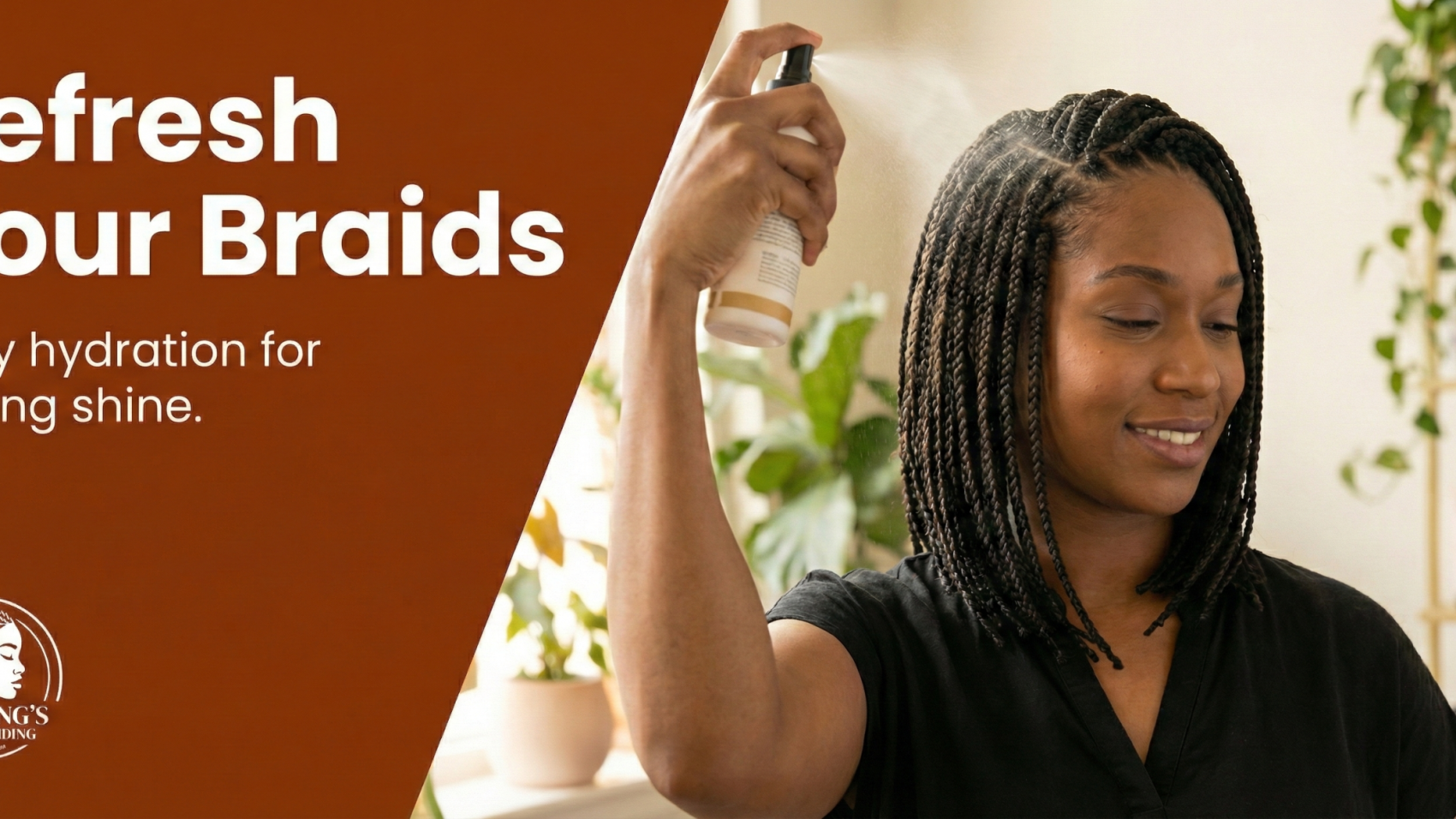
You chose stretched, elongated curls for a reason. If those curls shrink up with moisture, humidity,  or sleep compression, you lose the elongation that makes the style work for your face. Refresh with  a light water and leave-in conditioner mist, then gently stretch the curls downward while damp.  Sleep with a long satin bonnet that does not bunch the ends up. 

Oblong Face: Prevent Curl Elongation 

You chose wide, full curls that end at shoulder height. The maintenance goal is keeping that volume  horizontal rather than letting curls stretch and elongate over time. Use a curl refresher spray and  scrunch the curls upward toward the scalp to encourage width. Avoid weighting curls down with  heavy oils. A satin scarf wrapped loosely to preserve the curl shape (not flatten it) is your best sleep  option. 

All Face Shapes: Universal Maintenance Tips 

  • Sleep with a satin bonnet or on a satin pillowcase every single night — friction is the number  one enemy of curly ends. 
  • Refresh curls with a mix of water and a lightweight leave-in conditioner in a spray bottle  every 2 to 3 days. 
  • Keep your scalp moisturized with a braid spray or diluted hair oil applied with a nozzle  directly to the parts. 
  • Avoid over-manipulating the curls daily — finger-combing or pulling causes frizz and  unraveling faster than anything. 
  • Wrap your edges with an edge scarf when working out or in high humidity to preserve the  front braids. 

Book Your Lemonade Braids With Curls in District Heights, MD 

Now that you know exactly which lemonade braids with curls variation works for your face shape  and what to communicate to make it happen, the only step left is finding a skilled braider who can  execute the vision. 

Blessing Hair Braiding specializes in lemonade braids with curls for all face shapes and hair types.  Serving clients in District Heights, MD and surrounding areas, our consultation process starts  with exactly the kind of face-shape conversation this guide covers — because we believe the right  install begins before a single braid is laid. 

Our braiders have years of experience in goddess lemonade braids, fulani lemonade variations,  and curly-end styles across all face structures. Every client receives a personalized consultation to  confirm curl drop point, braid size, and side sweep angle before we begin. 

Local Booking Offer

Get Your Lemonade Braids in District Heights

The Offer: Mention this guide when you reach out and receive a complimentary curl consultation before your install.

The Location: We are conveniently located on Old Silver Hill Road in District Heights, MD.


How to Book: Call Blessing Hair Braids at 301-613-6650 to schedule your appointment today.

Frequently Asked Questions 

How long do lemonade braids with curls last? 

Lemonade braids with curls last 4 to 6 weeks. The braided cornrow portion can last up to 8  weeks, but the curly ends begin to show wear around weeks 4 to 5 depending on your  maintenance routine. Synthetic curly hair such as water wave or bohemian bundles degrades  faster than human hair extensions but is also significantly more affordable. 

Do curly ends last as long as straight ends on lemonade braids? 

No, curly ends do not last as long as straight braid ends. Curly extensions are more susceptible  to frizz, tangling, and compression from sleep. The trade-off is that the style is significantly more 
striking and versatile. To extend the life of your curly ends, refresh them every 2 to 3 days with a  light mist of water and leave-in conditioner, and always sleep with a satin bonnet. 

What braiding hair is best for lemonade braids with curls? 

The best braiding hair for lemonade braids with curls is water wave bundles or Bohemian  braiding hair. Water wave offers a compact, defined curl with excellent longevity and a glossy  finish. Bohemian hair (often a blend of straight braid hair with loose curly extensions added)  creates a fuller, more voluminous look. Human hair braiding extensions last longest and can be  restyled with heat, but are the most expensive option. 

Can I wash my hair with lemonade braids with curls installed? 

Yes, you can wash your hair with lemonade braids with curls installed. Dilute a sulfate-free  shampoo with water in a spray bottle and apply it directly to your scalp and parts. Gently  massage with your fingertips rather than rubbing across the surface of the braids. Rinse by  tilting your head back rather than forward to keep braids from tangling. Squeeze — never wring  — the curly ends dry with a microfiber towel, then allow to air dry completely before covering. 

Which face shape is lemonade braids with curls most flattering on?

Lemonade braids with curls are flattering on every face shape when styled correctly for that  specific structure. Oval faces have the most flexibility. Round and oblong faces require the most  specific curl length choices. Heart and square faces benefit most from intentional curl volume  placement. The key is not which face shape the style suits best — it is getting the right variation  for your specific face, which is exactly what this guide is designed to help you do. 

What is the difference between goddess lemonade braids and regular lemonade braids  with curls? 

Goddess lemonade braids have curly extension hair woven throughout the braid length, while  regular lemonade braids with curls feature curly hair only at the ends. Regular lemonade braids  with curls typically feature fully braided lengths with curly or wavy hair attached only at the ends.  Goddess lemonade braids have a more romantic, undone texture throughout the braid, while  regular curly ends create a cleaner braid body with a textured finish. 

What face shape are lemonade braids best for? 

Lemonade braids suit all face shapes and are not exclusive to any one face structure. The side swept structure of lemonade braids naturally benefits oval and heart faces due to their balanced  or forehead-prominent proportions. However, round, square, oblong, and diamond faces all look  stunning in lemonade braids with curls when the correct braid size, curl type, and curl drop point  are chosen. The face shape guide above gives specific recommendations for each structure.

How much does it cost to get lemonade braids with curls? 

Lemonade braids with curls typically cost between $150 and $300 at a professional salon.  Adding curly ends rather than straight ends usually adds $20 to $50 to the base price due to the  additional hair and time required. Human hair extensions will push the cost higher, sometimes to  $350 or more. Prices vary significantly by city and salon, so always confirm pricing including the  cost of hair before booking.
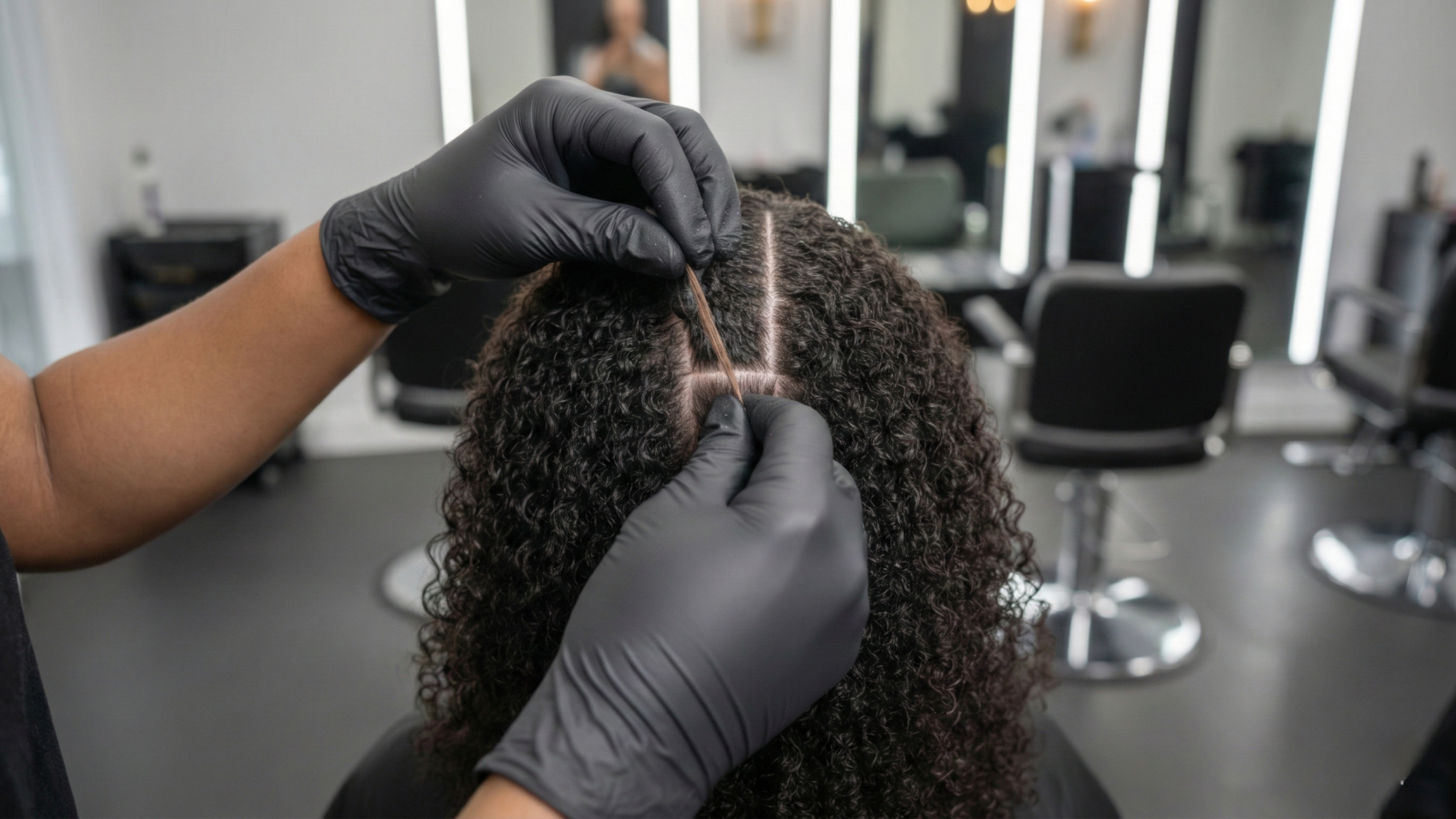
Close-up view of a master braider's hands demonstrating the feed-in technique for how to do african hair braiding styles in a professional salon.

How to Do African Hair Braiding Styles: A Master Braider’s Guide

How to Do African Hair Braiding Styles: A Master Braider’s Guide

If you are staring at the mirror, arms already aching, wondering exactly how to do african hair braiding styles without damaging your edges, you are not alone. Every day, countless women search for tutorials hoping to achieve flawless protective styles at home. But let’s address the elephant in the room: DIY braiding often leads to throbbing scalps, crooked parts, and severe hair damage.

When you learn how to do african hair braiding styles, you aren’t just learning a hairstyle; you are learning a centuries-old art form that requires mathematical precision, chemical understanding, and immense physical endurance. Improper technique doesn’t just look messy—continuous pulling on the hair roots can lead to a medical condition called traction alopecia, causing inflammation and gradual hair loss over time.

As professional braiders, we are pulling back the curtain. We are going to show you the exact, high-level techniques used in professional salons so you can understand the true mechanics of how to do african hair braiding styles for ladies.

Phase 1: The Science of Preparation for Natural Hair

If you are searching for quick easy braided hairstyles for black hair, you might be tempted to skip the prep work. Do not make this mistake. The foundation of any long-lasting style is scalp chemistry and hair elasticity.

Whether you want to know how to do african braids with natural hair or specifically how to do box braids on natural hair, the preparation remains strictly scientific:

  • Porosity and Hydration: 4b and 4c hair types require intense moisture to maintain elasticity during the braiding process. We utilize deep-penetrating leave-in conditioners to ensure the hair cuticle is supple, which prevents snapping when tension is applied.
  • The “Banding” Stretch Method: To avoid thermal damage, master braiders often stretch natural hair using the “banding” method—a technique that elongates the curl pattern safely without relying on severe heat.
  • Product Layering: Knowing how to do african braiding correctly means knowing your products. We avoid heavy styling jams that cause white, flaky buildup. Instead, we use professional-grade edge controls that provide a clean, sleek grip for the perfect part.

Phase 2: The Architecture of Parting

Amateurs just draw lines; professionals build architectural grids. The secret to a style that falls naturally and hides the scalp lies entirely in the geometry of the base.

  • Grid Mapping: Using a fine-tooth metal rat-tail comb, the scalp must be mapped out symmetrically. This ensures the braids frame the face perfectly.
  • The Bricklay Blueprint: This is the ultimate pro secret. Instead of stacking square parts directly on top of each other, we use a “bricklay” pattern. By staggering the parts row by row like bricks on a house, the braids overlap seamlessly, leaving zero visible gaps.
  • Base Geometry: A classic square base provides a traditional drape, while triangular or diamond bases alter the weight distribution and movement of the final style.

Phase 3: The Core Braiding Mechanics (Extensions & Natural)

This is where the true skill gap lies. If you want to learn how to braid black hair with extensions or how to braid hair with extensions for beginners, you must master finger placement. Applying synthetic hair incorrectly is the leading cause of scalp tension.

The Anchor Method (Traditional Box Braids)

To execute how to do african braids with extensions using the traditional method, the synthetic hair is folded to create a secure loop. The braider must use a highly specific “pinch and lock” finger positioning at the root. This secures the synthetic extension tightly to the base without pulling the actual hair follicle out of the scalp.

The Feed-In Rhythm (Knotless Braids)

Knotless braids are revolutionary for scalp health. The technique begins strictly with the client’s natural hair. As you move down the hair shaft, you must master the micro-feed technique—sliding small, uniform pieces of synthetic hair between the index finger and thumb. This gradual feeding reduces scalp tension drastically, eliminating the heavy, painful knot at the root.

The Underhand Stitch (Cornrows)

Cornrowing requires a continuous underhand pickup technique. The fingers must stay glued to the scalp, picking up perfectly even amounts of hair with every stitch. Tension mapping is critical here; the braider must secure the row firmly without pulling the delicate baby hairs around the hairline.

The Reality Check: Why DIY Braiding Often Fails (And Takes So Long)

We see it all the time. A client searches how to do african hair braiding styles for beginners, watches a five-minute video, and attempts to tackle their own head. But here is the reality of how to braid my own hair black girl—it is physically grueling and medically risky.

Have you ever wondered why african hair braiding takes so long? A proper, tension-free installation takes anywhere from 4 to 8 hours. When you attempt how to braid hair for beginners on yourself, your arms are elevated for hours. As arm fatigue sets in, your grip naturally loosens. This results in frizzy, uneven braids that slip out after a single week.

Worse yet is the “blind spot.” You cannot see the back of your own head to achieve perfect bricklay parts. In frustration, DIYers often pull the hair blindly. This continuous pulling and mechanical stress on the hair follicles leads directly to traction alopecia. In early stages, this causes broken hairs and bald spots near the temples. If the tension continues over an extended period, it can lead to permanent, irreversible hair loss and scarring.

Are you currently searching tutorial to braid african hair for beginners but your arms are already burning just thinking about the 6-hour workout? Don’t risk permanent edge damage, uneven parts, or severe scalp pain. Leave the heavy lifting to the experts and save your hair health.

Ready to skip the DIY struggle? Book a flawless, tension-free, and professional protective style at Blessing Hair Braids in District Heights, MD. Our master stylists guarantee clean parts and painless edges. Secure your chair today and experience the luxury of professional braiding.

Phase 4: Professional Finishing and Sealing

The final steps separate a messy DIY job from a premium salon finish.

  • The Boiling Water Dip: To seal synthetic extensions and prevent unravelling, the ends are carefully dipped in boiling water. This requires precise timing and strict safety protocols to avoid steam burns.
  • Mousse Molding: A high-quality setting mousse is generously applied over the finished braids, which are then tied down with setting tape. This bakes the style into place, flattening any remaining flyaways and locking the roots for weeks of wear.

Frequently Asked Questions About Braiding

What is african hair braiding?

African hair braiding is an ancient, culturally significant art form and hairstyling technique. It involves intricately weaving the hair—often incorporating synthetic or human hair extensions—to create stunning, low-maintenance protective styles that shield natural hair from environmental damage and daily manipulation.

What are the different styles of African hair braiding?

There is an incredible variety of styles suited for different hair textures and lengths. The most popular professional styles include traditional box braids, tension-free knotless braids, intricate Fulani braids, classic cornrows, Senegalese twists, and boho (bohemian) braids featuring loose curly pieces.

What are the six foundational braiding techniques?

While styles vary, the core of all braiding comes down to six foundational techniques: the standard three-strand plait (overhand), the underhand stitch (used for cornrows), the two-strand twist (rope method), the feed-in method (adding hair gradually without knots), the lock-and-twist method (for dreadlocks or faux locs), and the bricklay parting technique to hide the scalp.

How long does african hair braiding last?

When installed correctly by a professional, most African hair braiding styles will last anywhere from 4 to 8 weeks. Traditional knotted box braids tend to hold their base slightly longer (6 to 8 weeks), while feed-in knotless styles typically require a touch-up around the 4 to 6-week mark as the natural hair begins to frizz at the root.

How much are african hair braiding?

Pricing depends heavily on the complexity, length, and size of the braids. At Blessing Hair Braids in District Heights, our transparent pricing reflects our expertise and time: traditional Box Braids range from $100 to $300 (taking 4-8 hours), while our highly sought-after, tension-free Knotless Box Braids range from $150 to $350 (taking 5-8 hours).

What braids are trending in 2025?

The biggest trends in protective styling prioritize scalp health and texture. Knotless braids continue to dominate because they prevent traction alopecia. Additionally, “Boho” knotless braids (with human hair curls fed throughout) and precision stitch braids are highly requested for their modern, luxurious aesthetic.

A high-resolution, split-screen comparison showing the visual difference between traditional box braids with visible knots at the scalp on the left, and seamless, tension-free knotless braids using the feed-in method

What Is the Difference Between Box Braids and Knotless Braids?

What Is the Difference Between Box Braids and Knotless Braids?

Scalp tension, heavy roots, and days of physical pain should not be the price you pay for protective styling. If you are experiencing severe discomfort after a salon visit, or if you are currently searching a knotless vs box braids reddit thread trying to decide which method is safer for your natural hair, the answer lies entirely in the installation technique.

Choosing the right braid style means understanding the exact knotless vs box braids difference to protect your edges and promote healthy growth. This comprehensive guide breaks down exactly what are the key differences between knotless and box braids, covering tension levels, longevity, styling flexibility, and local pricing at Blessing Hair Braids in District Heights, MD.

Understanding Traditional Knotted Styles

When clients ask about knotless box braids vs regular box braids, or knotless box braids vs traditional, the comparison starts directly at the root.

For decades, the traditional method has been the standard in protective styling. To install these, the stylist sections your hair into individual plaits using precise square or triangular parts. The braider then takes the synthetic extension, folds it over your natural hair, and wraps it tightly around the base. This creates a highly distinct, visible knot resting directly against your scalp.

While this traditional method provides long-lasting protection and a classic aesthetic for everyday wear, that root knot creates immediate, heavy tension. The synthetic hair pulls directly on your natural hair follicle. This is the exact cause of that notorious break-in period where the scalp feels tight, heavy, and highly sensitive, making it difficult to style the hair into a bun or ponytail for the first few days.

The Mechanics of the Feed-In Method

When discussing what are knotless braids vs box braids, this alternative completely revolutionizes the installation process to prioritize scalp health. Instead of starting with a tight, heavy anchor, the feed-in method begins strictly with your natural hair.

The stylist starts braiding your own hair first, gradually incorporating small, carefully measured pieces of synthetic extensions into the plait as they move down the hair shaft. This creates a completely seamless appearance. (Note: sometimes users search for terms like knotless braids vs knotless box braids or knotless box braids vs regular, but they are all referring to this exact same tension-free feed-in technique).

Because there is no bulky knot sitting at the root, the style lies perfectly flat against the head and feels incredibly light immediately after installation. Because of this gentle approach, it is highly recommended as one of the safest African hair braiding styles for women with thin edges, fine hair, or tender scalps.

If you have a tender scalp and want immediate, pain-free styling flexibility right out of the salon chair, click here to book your knotless braids appointment with the expert team at Blessing Hair Braids today.

Head-to-Head Comparison: Comfort, Time, and Longevity

Looking at a knotless braids vs box braids side by side comparison clarifies exactly what to expect during your appointment. When weighing the knotless braids vs box braids pros and cons, or trying to comprehensively compare knotless and box braid installation time and longevity, consider these crucial factors:

Feature Traditional Box Method Feed-In Knotless Method
Installation Extension knotted at the root Extensions fed gradually
Scalp Tension High; painful break-in period Minimal; painless day one
Time 4 to 8 hours 5 to 8 hours
Longevity 6 to 8 weeks 4 to 6 weeks

Which Style Protects Your Edges and Promotes Growth?

A common question during salon consultations is which last longer knotless vs box braids? Even when clients review which last longer knotless vs box braids pictures online, the professional truth is that traditional knotted installations do hold up slightly longer. The knot acts as a physical anchor, keeping the base secure even as new hair grows in over 6 to 8 weeks. Feed-in styles usually require root touch-ups around the 4 to 6-week mark because the natural hair at the base begins to frizz sooner.

However, longevity is not the only factor. If you are wondering are knotless braids better for your edges, or specifically asking which braids are better for hair growth, feed-in styles win every single time.

What is the least damaging braid style? Without a doubt, the feed-in method. The lack of localized root tension prevents the pulling that leads to traction alopecia, allowing your natural hair to grow safely within the protective shield of the extension.

Best hair care products for maintaining knotless and box braids.

The absolute best hair care products for maintaining knotless and box braids include a lightweight, natural scalp oil, a diluted clarifying shampoo in an applicator bottle for carefully washing your parts, a lightweight leave-in conditioner spray for the length of the braids, and a high-quality satin bonnet or silk pillowcase for sleeping.

Popular Variations to Try This Season

From browsing knotless vs box braids pictures online, both installation methods offer incredible versatility. No matter the knotless vs box braids hairstyles you choose, a skilled braider can execute them flawlessly. Here are the highly requested variations installed at Blessing Hair Braids:

  • Boho knotless vs box braids: Stylists add loose, wavy pieces of synthetic or human hair throughout the length of the plait and at the ends for a highly textured, romantic finish.
  • Bone straight knotless vs box braids: For a sleek, ultra-smooth, and uniform finish that looks incredibly chic and professional.
  • Small knotless vs box braids: Opting for smaller sections requires more time in the chair, but it provides maximum styling flexibility, a highly natural look, and allows you to part your hair in countless directions.
  • Medium knotless braids: The perfect middle ground. It offers excellent longevity, reduces salon time, and provides a classic thickness that is easy to manipulate.

There are also frequent requests for knotless braids vs box braids men styles. The feed-in method is perfect for men with shorter natural hair who want a protective style without the painful pulling associated with traditional knotted plaits.

District Heights Pricing for Braiding Services

When researching the knotless braids vs box braids price, or looking for the average salon price for knotless braids versus traditional box braids, it is important to understand why the costs differ.

The feed-in method is consistently priced slightly higher across the industry because the gradual feed-in technique is far more intricate and takes more time (5 to 8 hours compared to the 4 to 8 hours required for traditional knotting).

At Blessing Hair Braids, here is exactly what you can expect regarding pricing and timeframes in District Heights:

  • Traditional Box Braids: $100 – $300 (4 to 8 hours)
  • Knotless Box Braids: $150 – $350 (5 to 8 hours)

Ready to upgrade your protective styling with a brand that prioritizes your hair health? Contact Blessing Hair Braids at 6108 Old Silver Hill Rd #219, District Heights, MD, to secure your chair today.

Frequently Asked Questions

Are knotless braids better than box braids?

From a hair health perspective, they are generally considered much better for your scalp and edge protection due to the complete lack of tension. However, traditional styles do provide slightly longer-lasting protection before frizzing occurs. The “better” choice depends entirely on whether you prioritize long wear over immediate comfort.

What are the disadvantages of knotless braids?

The main disadvantages are that they take longer to install (up to 8 hours), cost slightly more ($150-$350), and your natural roots may become frizzy faster than they would with traditional knotted styles.

Where can I buy synthetic hair for box braids?

If you are bringing your own hair to your appointment, we highly recommend visiting local beauty supply stores in the District Heights area, or purchasing from reputable online retailers that specifically sell pre-stretched, itch-free, antibacterial braiding hair to prevent scalp irritation.

Which salons in the US offer professional knotless braid services?

Most modern, professional braiding salons across the US now offer this service. However, it is absolutely crucial to read reviews and look closely at their photos to ensure their stylists are actually trained in the true feed-in method, rather than just hiding a traditional knot under a piece of natural hair.

What is the consensus on social media regarding the pain level?

If you search popular tags like #knotlessvsboxbraids, box braids vs knotless braids, or read through knotless braid vs box braids discussions online, the overwhelming consensus is clear: the feed-in method is virtually painless. Users consistently praise it for eliminating the severe scalp inflammation associated with the traditional knotted method.

A promotional image for Blessing's Hair Braiding. The left

Lemonade Braids 101 | 15+ Trending Styles, Pricing, and Maintenance

Lemonade Braids Hairstyles: 15+ Trends, Prices & Maintenance

Lemonade braids hairstyles have gone from Beyoncé’s music video to one of the most requested protective styles in salons across the country — and for good reason. They are sleek, long-lasting, and versatile enough to work for a school drop-off or a Saturday night out. But between choosing the right style, understanding pricing, and knowing how to make them last, there is a lot to navigate before you sit in the chair. As professional braiders in Forestville, MD, we put together this complete guide to walk you through everything — from what lemonade braids actually are, breaking down the most requested lemonade braids styles, real salon pricing, and our daily maintenance secrets. exactly what you should expect to pay and how to keep them looking fresh for weeks.

 What Are Lemonade Braids?

Lemonade braids are a highly structured protective style consisting of long, side-swept cornrows. Unlike standard straight-back cornrows, the braider parts the hair from one ear to the other, creating a distinct, asymmetrical cascade over one shoulder is it unique?

Lemonade Braids and Fulani Braids: Key Differences

While both are stunning protective styles, they have distinct differences in their parting patterns and cultural origins.

Fulani braids originate from the Fula people of West Africa. They traditionally feature a signature, straight-back cornrow braided directly down the center of the head, with the remaining braids cascading down the sides, often heavily adorned with beads.

In contrast, lemonade braids hairstyles are defined by their asymmetrical, side-swept parting pattern where all the hair is cornrowed to one specific side. If you want a symmetrical, culturally rooted look, Fulani is ideal. If you prefer a bold, side-swept profile, Lemonade is the exact style you need.

Origin Story:

While cornrows have been a staple of African hair culture for centuries, the term “Lemonade braids” was coined in 2016. Beyoncé wore this specific side-swept style in her visual album Lemonade, specifically in the “Formation” video. The look became an instant viral sensation, rebranding the classic side-cornrow style into the modern “Lemonade” look we know today.

Are Lemonade Braids Still in Style?

Absolutely. While the classic floor-length look remains popular, the style has evolved. Today, lemonade braids hairstyles often incorporate “Boho” curls, heart-shaped parts, and knotless techniques to keep the look fresh and modern.

Expert Styling Tip

The “Double Wrap” Night Routine

The Goal: Wake up with zero frizz and keep your parts looking surgically sharp for weeks.

The Method: Don’t just rely on a standard sleep bonnet. Tie a silk or satin scarf flat and tight around your roots to lock the side-swept cornrows in place. Then, tuck the hanging lengths of the braids into a long satin braid bonnet.


Why It Works: The scarf stops the exposed roots from lifting or getting fuzzy, while the bonnet prevents the ends from rubbing against your pillow and causing friction.

What Do Lemonade Braids Look Like?

To understand how do lemonade braids look, imagine a geometric masterpiece.

  • The Parting: The defining feature is the deep side part.

  • The Swoop: All braids follow a curved pattern, cascading over one shoulder.

  • The Precision: Lemonade braids with designs often feature smaller, intricate braids woven between the larger cornrows (often called “stitch braids”) to create a clean, sharp aesthetic.

What do lemonade braids look like on different face shapes?

Because they create an asymmetrical line, they frame the face beautifully, making them ideal for oval, heart, and round face shapes.

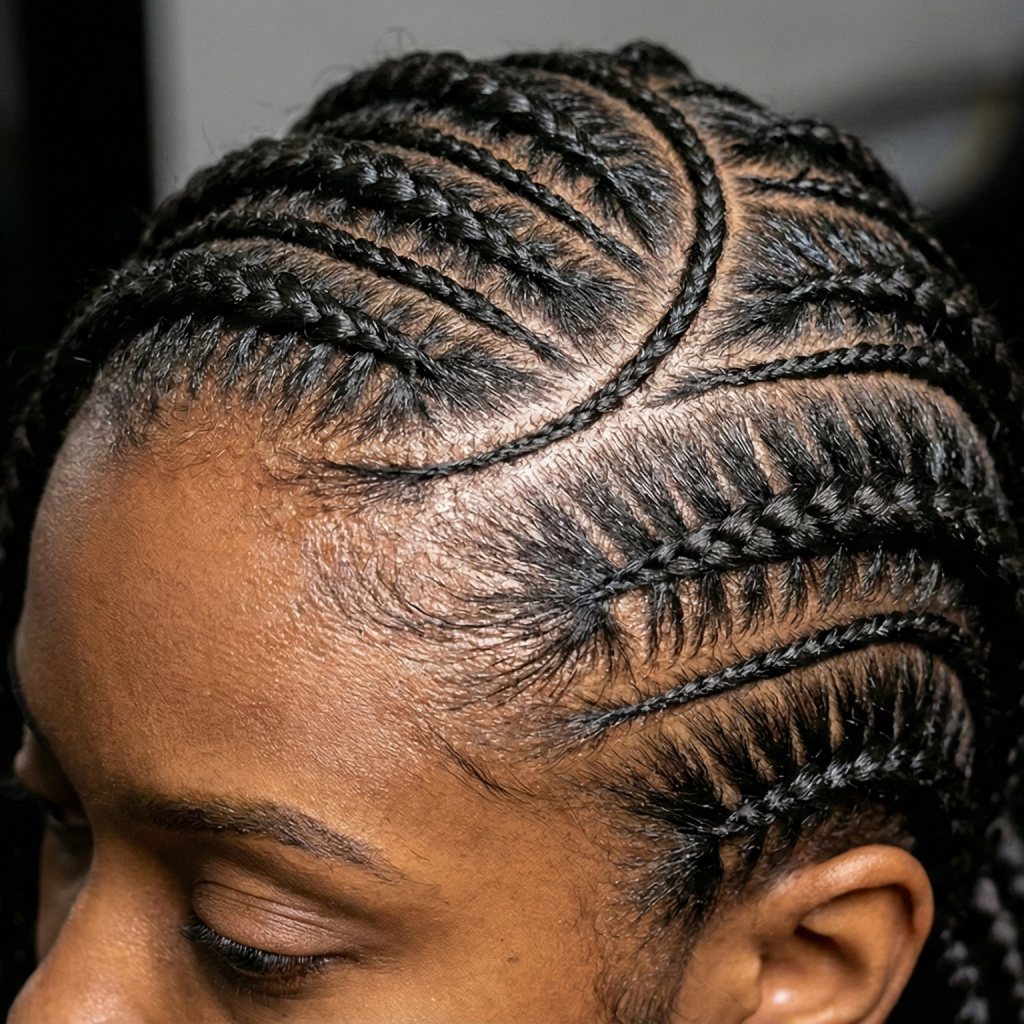
Close-up view of classic Lemonade braids showcasing the signature side-swept cornrows and precise geometric parting on the scalp.

Caption: Classic Lemonade Braids featuring intricate geometric parting.

15+ Trending Lemonade Braids Hairstyles

This style is versatile. Here are the top variations trending right now.

Boho Lemonade Braids with Curls

Currently, the most requested variation is boho lemonade braids.

  • The Look: This style mixes the structure of cornrows with the softness of loose curls. Stylists add curly hair extensions (often human hair or high-quality synthetic blends) throughout the braids and at the ends.

  • Variations: You can rock short lemonade braids with curls (a bob length) or go waist-length.

  • Why it works: Lemonade braids with curls add volume and a whimsical, “Goddess” vibe that softens the overall look.

If you are ready to try this style, check out our comprehensive guide on Lemonade Braids With Curls for every face shape to learn exactly what to ask your braider.

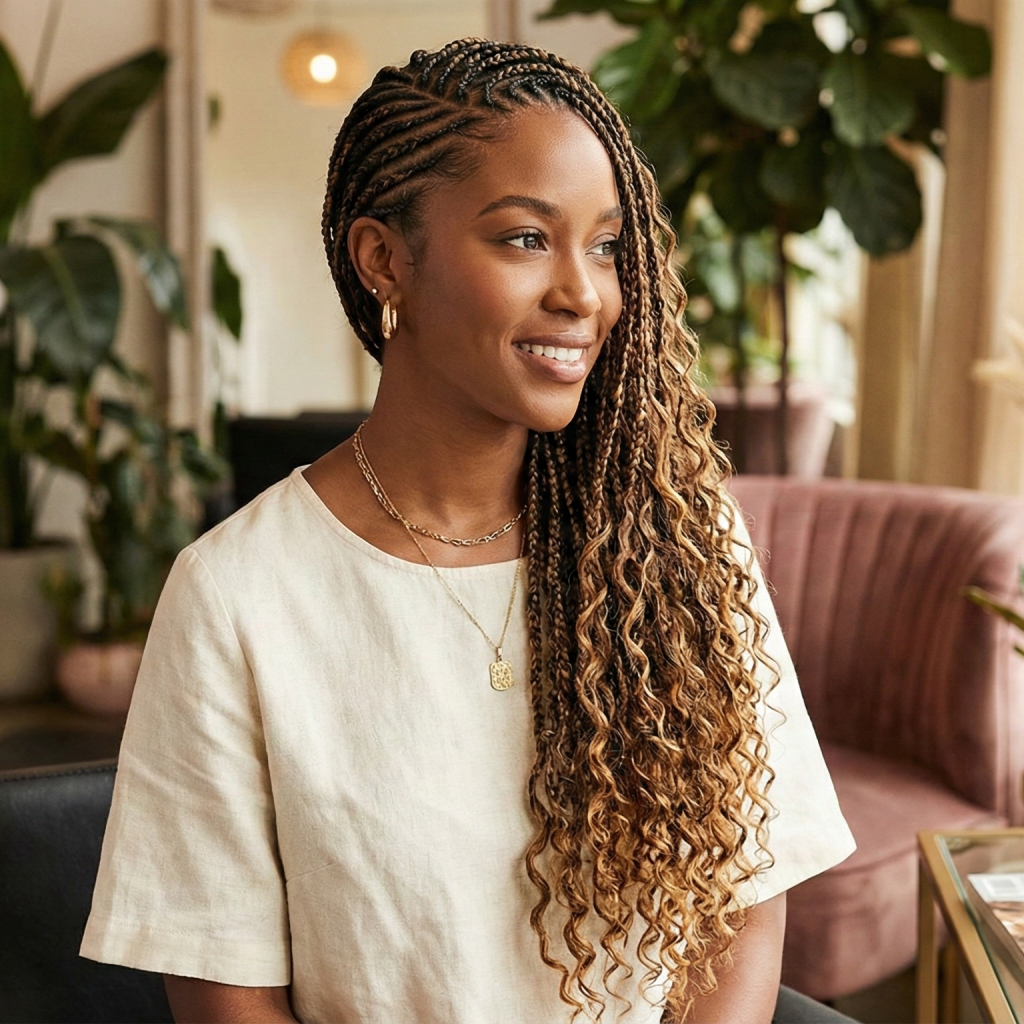
Waist-length boho Lemonade braids styled with a side part and intertwined with soft, loose curls and subtle highlighted ends.

Fulani & Knotless Lemonade Braids

For those who want a unique twist, hybrid styles are taking over.

  • Fulani Lemonade Braids: This mixes tribal patterns with the side swoop. It usually features one braid going down the center of the head, with the rest swooped to the side, often adorned with beads or cuffs.

  • The Knotless Hybrid: Traditional lemonade braids start with a “knot” at the scalp, which can cause tension. Lemonade braids with knotless starts are becoming the standard for healthy hair.

  • Back Variations: A popular modern twist is lemonade braids with knotless in the back. The front maintains the cornrow swoop, but the back consists of individual box braids. This reduces tension on the nape of the neck and allows for more styling flexibility (like high ponytails).

Small Lemonade Braids (Micro)

For a highly intricate and long-lasting look, small or micro lemonade braids offer maximum flexibility. Because the sections are so tiny, this style takes longer to install but provides a sleek, lightweight finish that moves naturally and minimizes frizz over time.

Large Jumbo Lemonade Braids

If you want to reduce your time in the chair, large lemonade braids are the perfect solution. These chunky, statement-making braids provide a bold geometric look. They are much faster to install and take down, making them a great temporary protective style.

Half Lemonade Braids Half Knotless

This hybrid style gives you the best of both worlds. The front features the signature side-swept cornrows, while the back transitions into individual braids. Wearing half lemonade braids half knotless reduces tension on the scalp and allows for much greater styling versatility.

Lemonade Braids Ponytail

For an elegant updo, the lemonade braids ponytail directs all the side-swept cornrows up into a high or low gathered ponytail. It is a fantastic option for warmer weather, workouts, or professional settings where you want the hair completely off your neck while maintaining the intricate side part.

Lemonade Twist Braids

Swapping traditional three-strand braiding hair for two-strand twists offers a softer, more textured variation. Lemonade twist braids maintain the deep side part but provide a distinct, rope-like aesthetic that is highly sought after for a boho-inspired finish.

Lemonade Braids for Kids & Accessories

What are lemonade braids for kids?

They are a fantastic, durable option for children. For kids, we recommend slightly larger parts to reduce time in the chair and avoid tension.

  • Accessories: Adding lemonade braids with beads at the ends is a classic, playful touch that also adds weight to keep the braids hanging neatly.

Lemonade Braids Wig Options

Not ready to sit for 5 hours?

  • The Solution: A lemonade braids wig without baby hair is a great alternative. Glueless full-lace wigs allow you to wear the style instantly. Look for “HD Lace” options to ensure the side-part looks like it’s growing from your scalp.

How to Do Lemonade Braids: Step-by-Step

If you have patience and steady hands, you can achieve this look at home. Here is how to do lemonade braids step-by-step.

1. Preparation

You cannot get a sleek finish on dirty hair. Wash, condition, and—most importantly—blow-dry your hair straight. If you have Type 4 hair, stretching it with a blow dryer is essential for neat parting.

2. How to Part Lemonade Braids

How to part lemonade braids is the hardest part of the process.

  • Start by creating a curved part from one ear, swooping across the top of the head to the other side.

  • Use a rat-tail comb and shine jam (or edge control) to make the lines surgical-sharp.

3. Installation

How to do lemonade braids generally involves the “feed-in” method.

  • Start with your natural hair.

  • Gradually “feed in” small pieces of braiding hair as you braid backward/sideways. This keeps the braid flat and natural-looking (unlike the old-school method which can look bulky).

Pro-Tip: If you are a beginner, buy pre-stretched braiding hair. It saves time and prevents tapered ends from unraveling.

How Much Do Lemonade Braids Cost?

Before you book, it is helpful to understand the factors that determine how much lemonade braids cost. While prices vary by city and stylist expertise, several details will influence your final quote.

Key Price Factors:

  • Style Complexity: Standard cornrows are the most affordable. Lemonade braids with designs (like hearts, zig-zags, or stitch braids) require more skill and time, increasing the investment.

  • Length & Size: Floor-length or knee-length braids require significantly more labor than mid-back styles. Similarly, “micro” or small braids cost more than jumbo braids.

  • Add-Ons: Styles like the Boho look (adding curly human hair) or hybrid knotless styles will typically be at a premium tier due to the extra materials and technique required.

Time Commitment:

Patience is key for a flawless look. You should expect to be in the chair for 3 to 6 hours, depending on the length and size of the braids you choose.

Maintenance: How to Style Lemonade Braids

You’ve invested the money; now make them last. Knowing how to style lemonade braids and care for them is key.

Night Routine: How to Wrap Lemonade Braids at Night

How to wrap lemonade braids at night is specific because of the side pattern.

  1. The Scarf: Wrap a silk or satin scarf flat around your head, following the direction of the braids. This keeps the roots flat and prevents flyaways.

  2. The Bonnet: Place the long ends of the braids into a satin bonnet or use a long “braid bonnet” to protect the ends from friction.

Daily Refresh

  • Scalp Care: Apply a lightweight oil (like jojoba or peppermint) to the parts to prevent itchiness.

  • Flyaways: Apply a dime-sized amount of mousse over the braids and tie them down with a scarf for 10 minutes in the morning. This “resets” the sleek look.

Where to Get Lemonade Braids Near You

If you’re searching for a skilled lemonade braids stylist in the DMV area, Blessing Hair Braiding serves clients across Silver Hill, MD, Walker Mill, Forestville, and Capitol Heights. These Prince George’s County communities are just minutes from our salon, making it easy to come in for a fresh install, a touch-up, or a full Boho transformation.

Whether you’re in Forestville looking for a protective style before the school year or in Capitol Heights wanting a sleek cornrow swoop for an upcoming event — we’ve got you covered. Book your lemonade braids appointment with her here.

Frequently Asked Question

Q: How long can lemonade braids last?

A: Generally, lemonade braids last between 4 to 6 weeks. With proper maintenance (wrapping them at night and moisturizing the scalp), you can push this to 8 weeks, but we recommend taking them down after 6 weeks to prevent hair matting and breakage.

Q: Do Lemonade braids last long?

A: Yes, they are considered a long-lasting protective style. However, because the scalp is exposed in intricate patterns, new growth (frizz) becomes visible faster than with individual box braids. Using mousse and a scarf regularly can extend their life.

Q: How to wrap lemonade braids at night?

A: The best method is the “double protection” technique. Use a silk scarf tied tightly around the hairline and the top of the head to keep the cornrows flat. Then, tuck the hanging lengths of the braids into a satin bonnet or pillowcase to prevent friction on the ends.

Q: What kind of hair is best for lemonade braids?

A: For the best results, use pre-stretched synthetic braiding hair (like X-pression). This hair is tapered at the ends, which makes feeding it into the cornrow much smoother and prevents the braids from unravelling. If you are doing boho lemonade braids, you will also need a pack of human hair deep wave or water wave bulk hair for the curly pieces.

Q: Do lemonade braids damage your edges?

A: They can if installed too tightly. The “swoop” pulls hair in a specific direction, which can cause tension on the hairline (traction alopecia) if the braider pulls too hard. Always ask your stylist for a “low tension” start, or opt for the knotless method at the hairline to protect your edges.

Q: How Long Does It Take to Do Lemonade Braids?

A: Patience is key for a flawless, protective style. On average, you should expect to be in the chair for 4 to 6 hours.

How to Manage Your Hair After Braids

How to manage your hair after braided: The Complete 8-Week Care Schedule

How to Manage Your Hair After Braided: The Ultimate 8-Week Care Guide

The health of your hair isn’t determined when you get in the chair—it’s determined by how to take care of hair after braids once you leave the salon. We see it all the time at Blessing Hair Braiding: a client gets a flawless install, but four weeks later, they aren’t sure how to manage your hair after braided, and their edges start thinning.

Below is the exact 8-week schedule we recommend to our clients to keep their style fresh and, most importantly, how to take them down without losing your edges.

Phase 1: The 8-Week Maintenance Schedule (While Braids Are In)

The key to successful hair maintenance after braids is knowing when to moisturize and when to simply leave your hair alone.

Important Note on Duration: Not all braids last 8 weeks.

  • Knotless Braids: 4–6 Weeks Max (Because the base is natural hair, they loosen faster).
  • Traditional Box Braids: Up to 8 Weeks.
  • Cornrows/Feed-ins: 2–4 Weeks.
  • Keep this in mind as you follow the schedule below!
  • Weeks 1–3:  How to Soothe Freshly Braided hair (Tension Relief)
    Your scalp is most sensitive during this time. Do not pull your fresh braids into high buns or tight ponytails yet. Let gravity help them loosen naturally to prevent traction alopecia. If you feel itching, apply a light soothing oil (like Peppermint or Jojoba) to the parts.
  • Weeks 4–6: The “Refresh” Phase (Hydration)
    This is when dryness sets in. Use a water-based braid spray daily because dry hair snaps, while moisturized hair stretches. If you need to wash, use a nozzle bottle to apply diluted shampoo directly to the scalp. Focus on the parts and squeeze—do not scrub vigorously, or you will create frizz. 

    The Nighttime Routine: How to Manage Your Hair After Braided Overnight If you sleep on cotton pillowcases, your braids will frizz instantly. To keep them fresh:

    • Wrap It Up: Always wear a jumbo satin bonnet or silk scarf.

    • Pineapple It: If your braids are long, pile them loosely on top of your head to reduce tension on the back of your neck.

  • Week 8: The Hard Stop
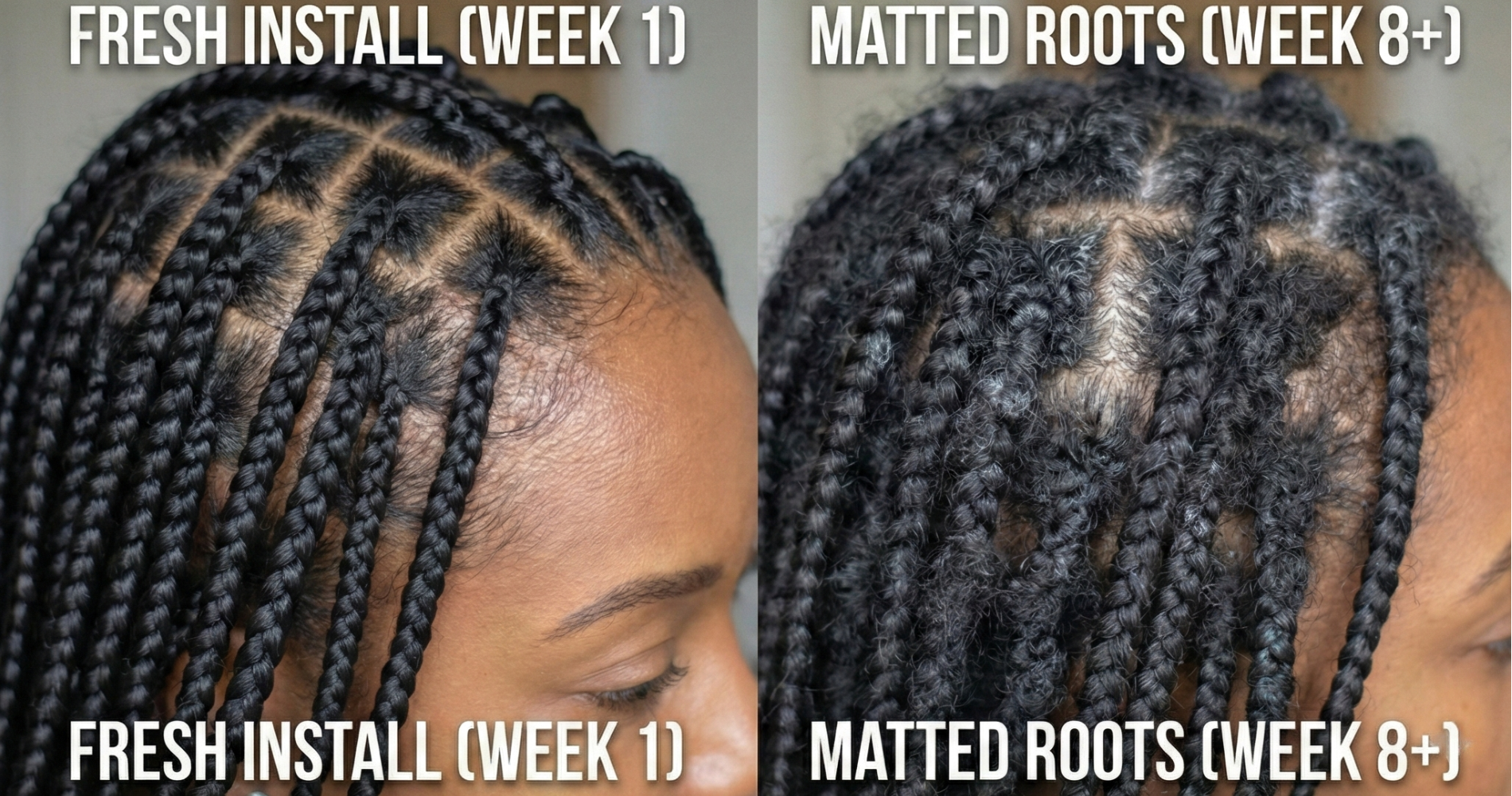
    This is the most critical rule: Do not keep braids longer than 8 weeks. Leaving them in too long allows your new growth to twist around the synthetic hair, leading to locking. If you want to avoid severely matted hair, week 8 is your deadline for removal.

What are the signs of unhealthy braids?

If you see these signs, take them down immediately to avoid permanent damage:

  • Heavy Buildup: A thick white ring of dirt at the root.

  • Locking: New growth twisting around the synthetic hair.

  • Thinning Edges: The braid is hanging by a few strands of hair.

Leaving them in past this point guarantees severely matted hair. Week 8 is your deadline.


Woman with fresh knotless braids styled at Blessing Hair Braiding in District Heights MD


Phase 2: The Takedown (CRITICAL: Read Before You Unravel)

Many clients ask, “What should I do to my hair after removing braids?” The answer starts before you even touch a bottle of shampoo. If you see a giant clump of hair after braids taken out, do not panic—this is just shed hair that has been trapped for 8 weeks.

Why does hair matted after braids?

It usually happens at the “Line of Demarcation“. This is the sticky spot at the base of your braid where your new growth meets the synthetic hair. It is a mix of dirt, edge control, and sweat.

The Golden Rule: You MUST detangle this buildup with oil or conditioner before wetting the hair. If water touches this buildup while it is dry, it will lock up like a dreadlock instantly.

How to get build up out of Knotless braids

This is the professional secret to removing that buildup without cutting your hair:

  1. Saturate the buildup spot with a heavy oil (olive oil) or aloe vera gel.
  2. Massage it with your thumb and index finger until the “gunk” softens.
  3. Gently pull the strands apart before you even unbraid the hair.

How to detangle synthetic braiding hair (Step-by-Step)

This is critical for how to treat your hair after box braids to ensure you don’t snap your natural ends. Follow this method to separate the synthetic fibre from your natural hair.

  1. Cut the Excess: Cut the synthetic braid about 2 inches below where your natural hair ends.
  2. Saturate the Demarcation Line: Apply a product with massive “slip” heavily to the root area.
  3. Unravel the Braid: Unbraid the synthetic hair all the way up to the root.
  4. Remove the Synthetic Knot: Gently pull the synthetic hair out. You will be left with a small clump of natural hair that feels “stuck” at the root.

How to detangle 4c hair after braids

Once the synthetic hair is out, follow this specific protocol for 4C textures:

  • Finger Detangle Only: Do NOT use a comb yet. Use your fingers to gently pull apart the shed hair at the roots.
  • Comb Out: Once the knot is loose, use a wide-tooth comb to smooth it out from ends to roots.

Severely matted hair Nothing Is working

If you neglected the takedown and are now facing a matte that won’t budge, stop immediately.

The Fix: Do not cut it. Saturate the matte in coconut oil or a deep conditioner. Cover your hair with a plastic cap for 1 hour to soften the knot. Then, use the metal end of a rat-tail comb to gently pick the knot apart, strand by strand, starting from the bottom. This is the only safe way regarding how to fix hair matted after braids.

Real Talk: Internet Myths vs. Professional Facts

There is a lot of confusion online about how to manage your hair after braided naturally. We want to set the record straight to save your edges (and your patience).

  • Myth: “You must wash your hair immediately after taking braids out.”

    • The Fact: If your scalp feels tender or sore to the touch, wait 24–48 hours. A raw, sensitive scalp can burn when exposed to clarifying shampoo. Deeply detangle with oil first, let your scalp “breathe” and settle for a day, and then wash.

  • Myth: “Apple Cider Vinegar (ACV) is the best natural cleaner.”

    • The Fact: Undiluted vinegar is highly acidic. We see clients frying their low porosity hair by dumping straight vinegar on it. Always dilute it (1 part ACV to 3 parts water) or stick to Aloe Vera gel for a safer, moisturizing detangler.

  • Myth: “I can just co-wash (conditioner wash) to get the dirt out.”

    • The Fact: Conditioner cannot remove 8 weeks of edge control and sweat. You must use a clarifying shampoo first. If you co-wash over dirt, you are just sealing the grime into your cuticle.

Critical Care Note

The “Scalp Scratch” Danger Zone

The Urge: Everyone wants to scratch their scalp the second the braids come out.
The Risk: Your scalp is currently hypersensitive. Scratching with fingernails creates microscopic cuts. When you apply shampoo later, it will sting and burn intensely.


The Professional Fix: Avoid nails entirely. Use the pads of your fingers or apply a soothing antiseptic oil (like Tea Tree) and massage gently.

Phase 3: The Revival Wash (The “Must-Haves”)

Once the braids are out and detangled, many people ask what should I do to my hair after removing braids? The answer is a hard reset.

The First Wash: Clarifying is Non-Negotiable

Standard moisturizing shampoo won’t cut it. You need to strip 8 weeks of edge control gel and oils.

The Solution: We recommend an Apple Cider Vinegar (ACV) rinse or a strong Clarifying Shampoo. This is how to treat hair after braid removal to ensure your follicles are unclogged and ready to grow.

The Protein vs. Moisture Diagnostic Test

After washing, touch your wet hair. This tells you how to treat your hair after taking out braids:

  • If hair feels mushy/gummy: It is weak and needs structure. Use a light Protein Treatment.
  • If hair feels hard/brittle (straw-like): It is thirsty. Prioritise Intense Moisture (Deep Conditioning).

Low Porosity Warning: Avoid heavy protein treatments immediately after braids; they can make low porosity hair snap.

The “End Check” (Don’t Skip This)

Even with perfect maintenance, your ends have been rubbing against clothes for 8 weeks.

  • The Test: Look at the bottom inch of your natural hair. If it is see-through or knots easily when you comb it, those are dead ends.

  • The Fix: We recommend a “Dusting” (micro-trim) of 1/4 inch immediately after your revival wash. This stops splits from traveling up the shaft and ruining your length retention.

Phase 4: Deep Conditioning Hacks (Low Porosity Focus)

If you are wondering how to manage braid damage effectively, the secret is heat.

The “Low Porosity” Heat Hack

  • The Science: Low porosity hair has tight cuticles that repel water. If you just put cold conditioner on it, the product sits on top.
  • The Fix: You must use heat (a steamer, thermal cap, or even a hot towel) to force the moisture into the hair shaft. This turns a regular conditioner into a hydration treatment.

Phase 5: The Resting Phase & Pre-Install Prep

How Long Should You Let Your Hair Rest After Braids?

We know you want to look fly again, but you must rest your scalp.

The Rule: We recommend a 2-week minimum break.

Why? Your scalp needs time to recover from the weight and tension of the extensions. Use these two weeks to do two deep conditioning treatments.

Before Your Next Appointment at Blessing Hair Braiding:

To ensure your next install is itch-free and lasts longer, follow these pre-prep steps 24 hours before you come in:

  • Deep Cleanse: Wash your hair thoroughly to remove all old oils.
  • Detangle: Please come with your hair detangled. This saves you time and money at the salon.
  • No Heavy Grease: Argan oil is fine, but avoid heavy grease before braiding, as it makes the hair slippery and harder to grip.

Book Your Next Install with Blessing Hair Braiding

Now that your natural hair is prepped, rested, and healthy, it is time for your next flawless style! If you are in District Heights, MD, and looking for expert braiders who care about the health of your hair just as much as the look, we are here for you.

Call us today at 301-613-6650 to schedule your appointment!

Frequently Asked Questions (FAQ)

Q: Can you get your hair braided after you dye it?

A: We strongly recommend waiting at least 2 weeks between dyeing and braiding. Chemical dyes (especially bleach) weaken the protein bonds in your hair. Putting immediate tension on freshly dyed hair often leads to severe breakage.

Q: How long should you let your hair rest after braids?

A: You should wait at least 2 weeks before getting your next install. This break allows your scalp tension to subside and gives you time to perform deep conditioning treatments to restore the strength of your hair shaft.

Q: Should I do a protein treatment after braids?

A: It depends on how your hair feels. If your hair feels mushy, gummy, or overly soft when wet, yes—use a light protein treatment to restore structure. However, if your hair feels hard or brittle, avoid protein and focus on intense moisture (deep conditioning) first, as protein can snap dry hair.

Q: How to fix hair matted after braids?

A: Never wash it first! Saturate the matted area with a detangling oil or conditioner to create slip. Use your fingers or the tail of a comb to gently unpick the knot starting from the bottom of the mat, not the top. Patience is key.

Q: How to detangle Black hair after braids?

A: Always detangle on damp (not soaking wet) hair that is saturated with conditioner. Section the hair into 4-8 parts to keep it manageable. Use your fingers to remove the shed hair first, then follow with a wide-tooth comb.

Q: What should I do to my hair after removing braids?

A: Start with a clarifying shampoo to remove product buildup, then follow immediately with a deep conditioner using heat. If your hair feels weak or gummy, follow up with a mild protein treatment to restore strength.

Q: Is it normal to lose a lot of hair after taking out braids?

A: Yes, do not panic! On average, you shed about 100 hairs a day.

  • The Math: If you keep braids in for 8 weeks, that is roughly 5,600 strands of shed hair that had nowhere to go.

  • The Test: Look at a fallen strand.

    • White Bulb at the end? = Natural Shedding (Healthy).

    • Jagged/No Bulb? = Breakage (Needs Protein).